
Summer Layering Made Easy
People often ask why SHINSEI chose Madhubani art as the foundation of its designs. The answer isn’t found in a business plan or a market trend. It begins with a memory.
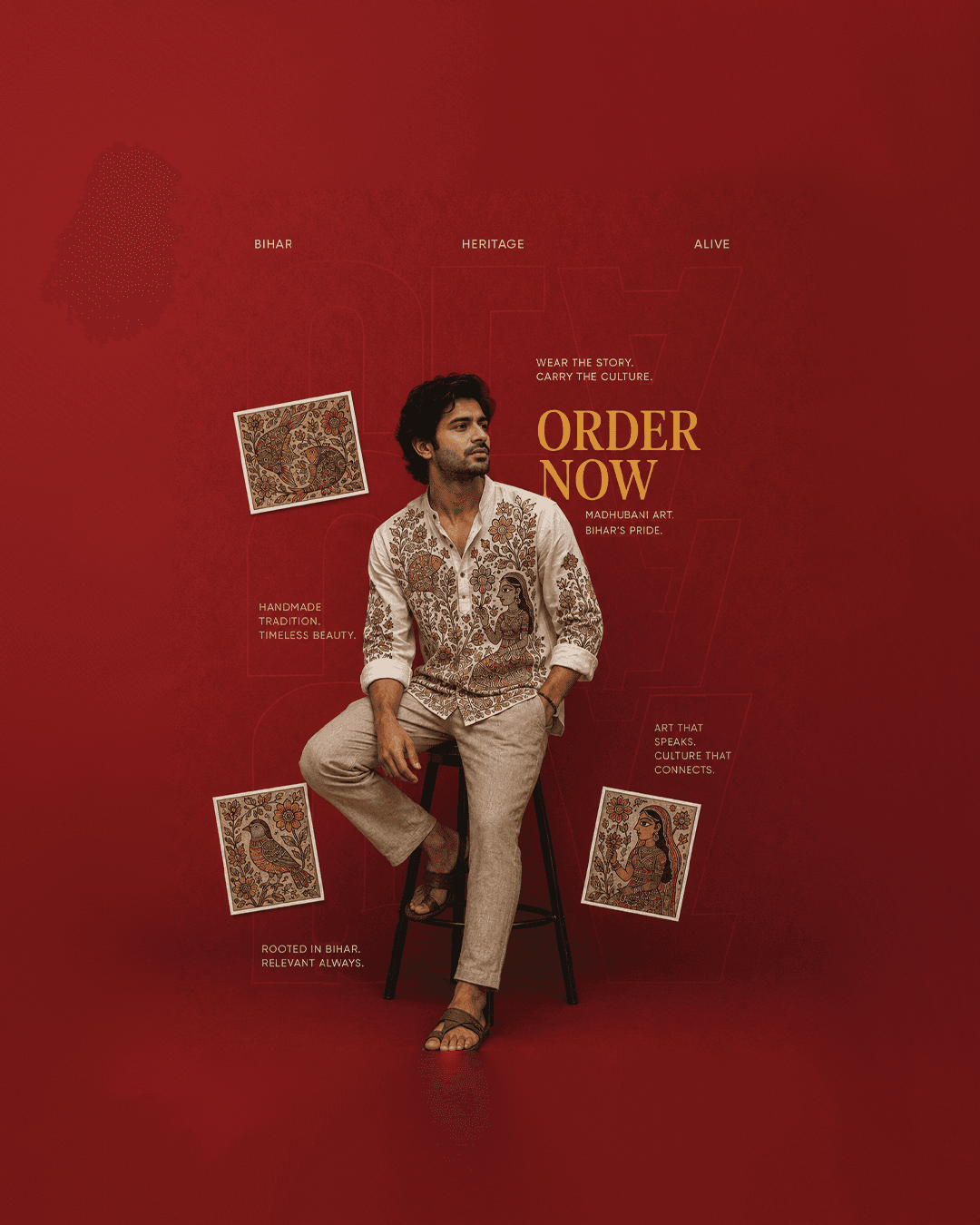
People often ask why SHINSEI chose Madhubani art as the foundation of its designs.
The answer isn’t found in a business plan or a market trend. It begins with a memory. My earliest memory of Madhubani art goes back to school. While many know it from textbooks, I remember seeing it everywhere. My mother owned sarees adorned with these prints; our home was filled with curtains, bedsheets, and everyday objects carrying the same intricate patterns. Growing up in Bihar, it was impossible not to notice.
Even today, walls across Patna are painted with this art, a quiet reminder that this tradition isn’t confined to museums it is woven into our surroundings. I was fascinated by it from an early age: the vibrant colours, the intricate linework, and the ability to tell complete stories through a single composition.
As I grew older and began conceptualizing SHINSEI, I found myself returning to these memories. I had seen Madhubani interpreted beautifully on women’s clothing for years, each piece demanding attention through its unique visual language. I wondered why we rarely saw that same level of thoughtfulness in menswear. That question became the spark that started SHINSEI.
More Than Decoration What fascinated me wasn't just how Madhubani looked, but what it could communicate. Traditional Madhubani paintings are rich with symbolism. Every fish, tree, bird, and human figure exists for a reason. Rather than functioning as mere decoration, these elements come together to narrate entire events and ideas. This depth is what drew me in the realization that art could be as meaningful in its process as it is in its final form.
Why We Reinterpret Instead of Reproduce
One of the questions we’re often asked is: Why not simply print existing Madhubani paintings onto garments? The answer is simple. SHINSEI was never created to reproduce traditional art; it was created to start a conversation between tradition and contemporary design. Interestingly, I discovered that Japan was among the earliest countries to systematically preserve and celebrate Madhubani art through dedicated collections. That recognition left a lasting impression on me, and it influenced our identity. Our brand carries a Japanese name because it reflects that cultural bridge. We chose to combine the storytelling of Madhubani with Japanese principles of balance, restraint, and thoughtful composition.
Every design begins with respect for its origins, but it is reinterpreted for a modern audience. Not to replace tradition, but to help it evolve.
Our Responsibility
Working with a traditional art form comes with a profound responsibility. We believe that begins with respect. Our intention is never to distort culture or misrepresent traditions. We are committed to collaborating with local artisans, acknowledging their craft, and ensuring that every interpretation honors the spirit of the tradition while allowing it to exist in a modern context.
What We Hope You See
When someone wears SHINSEI, I don’t expect them to know every historical detail of Madhubani art. But I do hope they pause. I hope they look a little longer. I hope they become curious enough to ask why a design exists and where its story began. Perspective changes everything. Sometimes, all it takes is a single garment to see something familiar in an entirely new way. If SHINSEI can inspire even a small shift in how people view culture and the stories hidden within our everyday objects, then we have achieved something far greater than just creating clothing.